
As a puppy she’d play with anyone. Now, somewhere between six months and two years old, she’s started growling at dogs who rush up, snapping when they sniff her, or barking and lunging on the lead. You’re worried something has gone wrong.
As dogs grow up, many become less tolerant of rude or bouncy greetings, more choosy about who they play with, and quicker to say “back off”. Teenage dogs are also more sensitive to unpleasant experiences and learn fast, so one frightening meeting can count for a lot. And other teenage dogs can be rough company.
Keep greetings few and kind
- Stop the free-for-all for now. Avoid busy dog parks and on-lead hellos with dogs you don’t know. Lead greetings are awkward for many dogs: they can’t move away, and the lead pulls them into stiff, face-to-face meetings.
- Choose her friends. A few calm, polite adult dogs she already likes are worth far more than lots of new ones. Short, easy meetings that end well build her confidence.
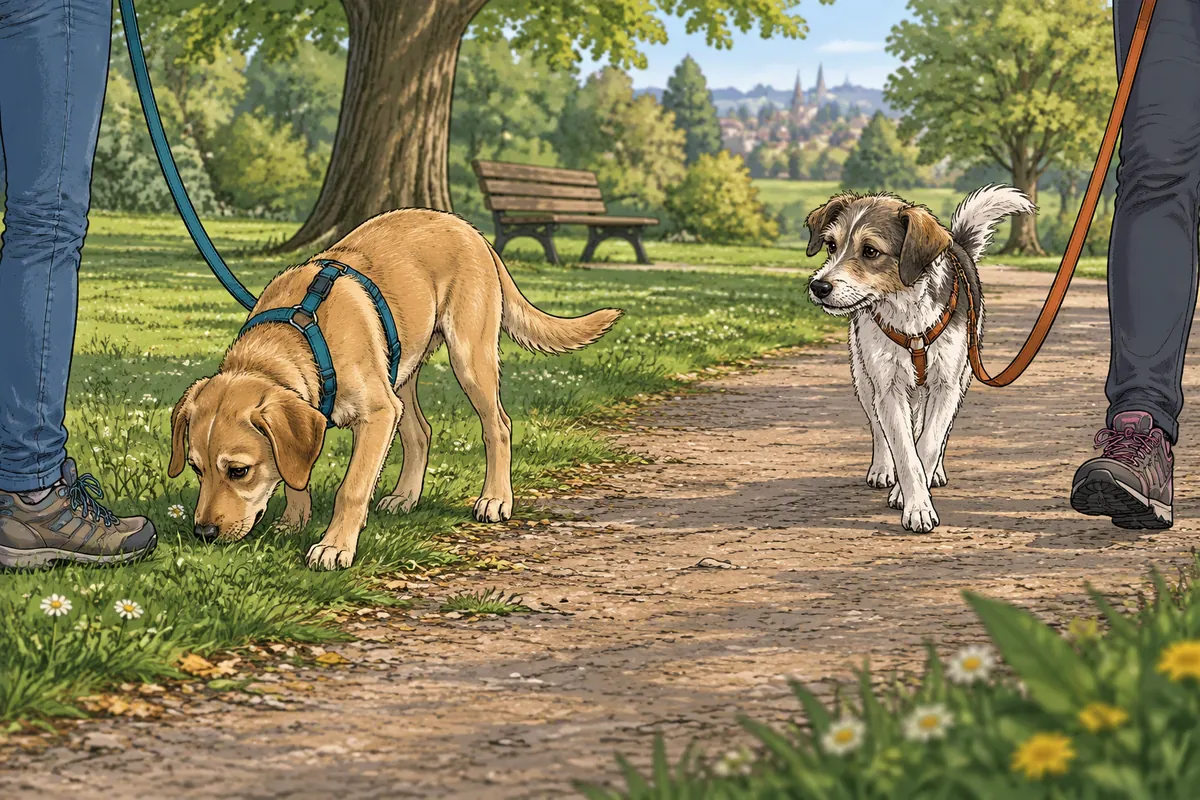
- Let her say no. If she turns away, sniffs the ground or moves behind you, she’s telling you she’s had enough. Help her leave.
Help her on walks
- Give her space. Cross the road, step onto a verge, or turn round early. Distance is the quickest way to keep her calm.
- Teach a happy U-turn and reward her for looking away from other dogs. There’s more in He barks and lunges on walks.
- Tell other owners, “She’s in training, please call your dog.”
Watch what comes before the growl
A growl is a warning, and warnings are good: they give everyone a chance to back off. Never punish it. Instead, notice the smaller signs that come first, such as freezing, a hard stare, lip-licking or turning her head away, and help her out of the situation before she needs to growl.
Check her health
Ask your vet to check for anything painful (teenage dogs often hurt themselves in rough play), and mention any change around her seasons. Hormonal changes can play a part, and whether or when to neuter is a conversation to have with your vet.
When to ask for help
Get help if she has bitten or snapped at a dog, if her reactions are getting bigger or more frequent, or if you’re avoiding walks. Help early in adolescence can stop a phase becoming a habit.
Further reading
- Lee, E.-J. (no date) Success with impulsive dogs [Online course]. Lighten Up Dog Training.
- Lee, E.-J. (2025a) Moving beyond fear and anxiety 2025–6 [Online course]. Lighten Up Dog Training.